CommuteSpec participates in affiliate programs, meaning qualifying purchases made through our product links may earn us a commission at zero additional cost to you. How CommuteSpec is funded via affiliate partnerships
A bicycle saddle bag is one of the simplest ways to carry essentials without filling your jersey pockets or adding a bulky handlebar bag. The right size depends on what you actually carry: a mini bag may hold a spare tube and repair tools, while a large rear bag is better for commuting layers, groceries, or touring equipment.
The products below cover four distinct size categories. Their capacities and waterproof descriptions come from the seller-provided titles; detailed specifications, mounting systems, materials, and independent weather-resistance testing were not available. Treat “waterproof” as a stated listing claim rather than a verified performance guarantee.
Quick recommendations
- For a compact repair kit: the ThinkRider bag is listed at 0.4L and is the smallest clearly specified option.
- For a little more room without a large rear bag: the NEWBOLER 1.5L/2.5L model offers two stated capacity choices.
- For commuting or high-volume loads: the NEWBOLER 10L/13L bag is the largest option listed, but its fit, support, and load limits need checking before purchase.
- For a basic low-cost option: the Universal Bicycle Saddle Bag has no stated capacity in the supplied information, so confirm dimensions before ordering.
A small saddle bag works best when its job is limited to items such as tire levers, a multitool, a spare tube, patches, and perhaps a key or card. Smaller bags usually interfere less with pedaling and are less likely to become overloaded, but they are not suitable for bulky clothing or daily-carry items.
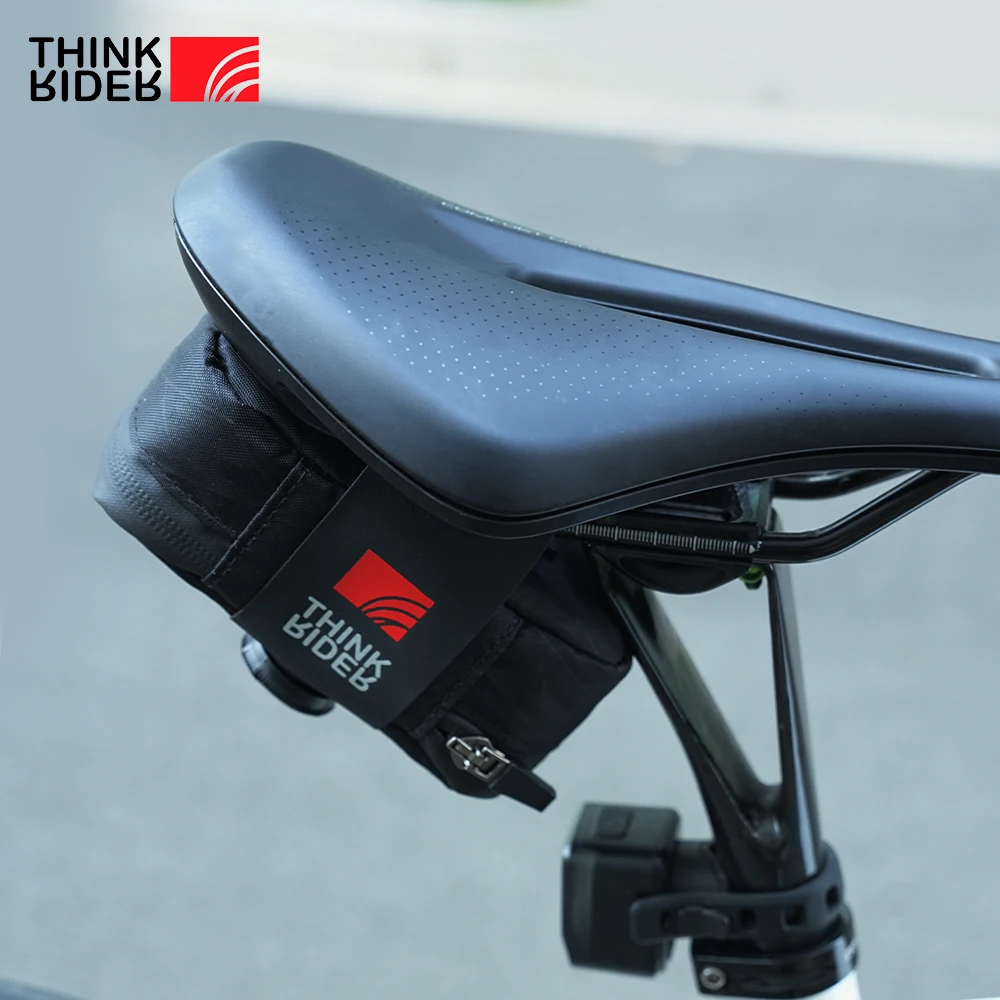
The ThinkRider listing specifies a 0.4L capacity and describes the bag as a mini tool-kit or repair bag for MTB and road bikes. That makes it the clearest fit for riders who want a dedicated emergency-repair container rather than general-purpose luggage. The supplied information does not confirm its exact dimensions, attachment method, zipper construction, or water resistance.
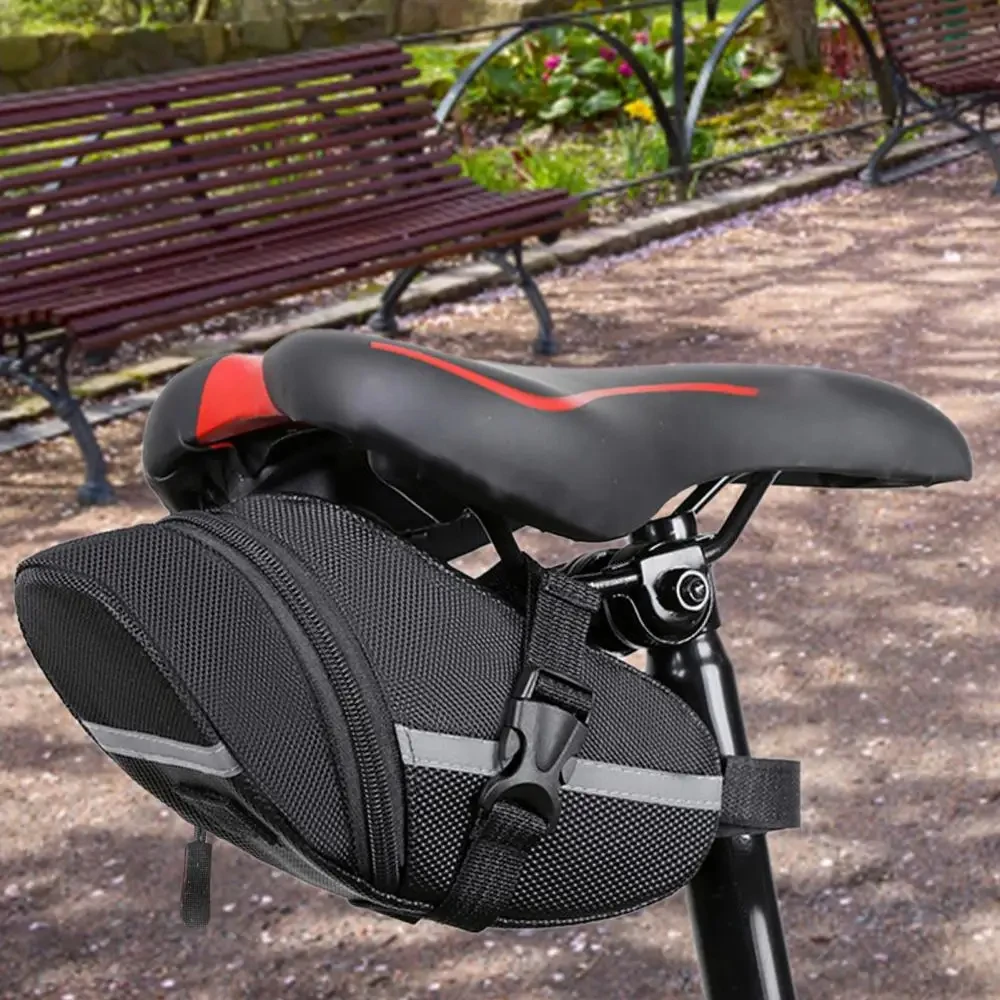
The Universal Bicycle Saddle Bag is presented as a waterproof tail bag for mountain and general bicycle use, but no capacity or detailed specification is available. It may suit a buyer looking for a simple budget bag, provided the seller confirms that it fits your saddle rails and can hold the items you need.
Mid-size storage for everyday rides
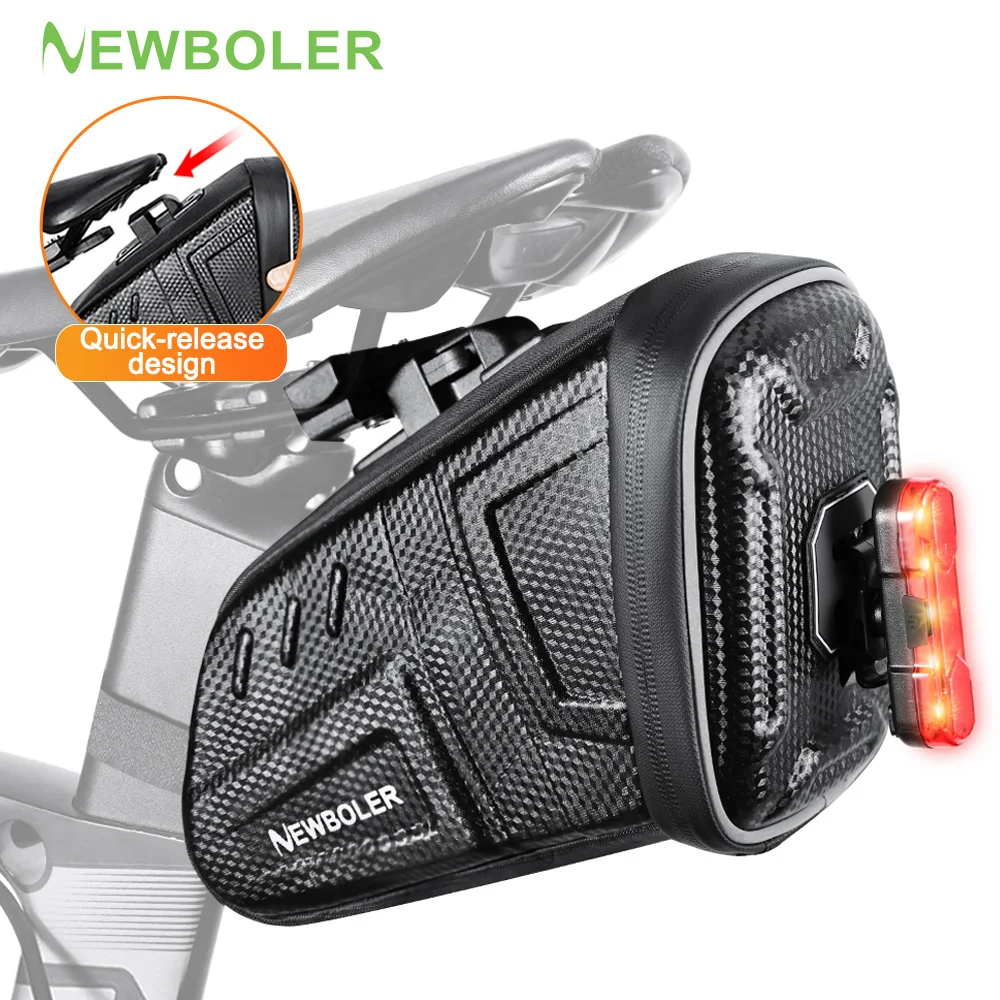
The NEWBOLER model is listed in 1.5L and 2.5L versions, with a waterproof description and reflective striping in the product title. This is a more versatile range than a mini tool bag: the smaller version may suit tools, a tube, and small personal items, while the larger version may accommodate a light layer or additional commuter essentials.
Because the supplied details do not identify the dimensions of each version, check the selected variant carefully. Capacity alone does not show whether a bag is long and narrow, tall, or wide. Shape affects heel clearance, seat-post compatibility, and how easily the bag fits beneath a particular saddle.
Large saddle bags for commuting and bulky loads
The larger NEWBOLER bag is listed in 10L and 13L capacities and described as a waterproof, foldable rear bag. This is the most suitable option here for riders who need substantially more than repair-kit storage, such as commuters carrying spare clothing or other larger items.
A large saddle bag needs more careful fitting than a mini bag. Before buying, confirm how it attaches, whether the saddle and seat post provide suitable anchor points, and whether the loaded bag could contact your thighs, rear wheel, rack, or mudguard. The seller information does not provide a maximum load, packed dimensions, mounting diagram, or independent water-resistance evidence, so those details remain unknown.
How to choose the right size
Choose 0.4L when you carry
- A spare tube or puncture supplies
- Tire levers and a compact multitool
- A small key set or payment card
Choose 1.5L–2.5L when you carry
- A repair kit plus personal essentials
- Gloves, snacks, or a compact layer
- More equipment without moving to a large rear bag
Choose 10L–13L when you carry
- Bulky commuting or touring items
- A change of clothes or larger accessories
- Loads that will not fit comfortably in a compact saddle bag
What to check before ordering
- Measure the available space. Check the clearance beneath your saddle and around the rear wheel, seat post, rack, and mudguard.
- Confirm the attachment system. The supplied listings do not establish whether each bag uses straps, buckles, a quick-release mount, or another system.
- Check the selected capacity. The 1.5L/2.5L and 10L/13L products appear to have variants; make sure the chosen option matches the required size.
- Use a liner for valuable electronics. Even when a listing says “waterproof,” the supplied evidence does not verify performance in sustained rain or immersion.
- Avoid overloading. A bag that sways, rubs the tire, or pulls heavily on its mounting points can affect handling and may damage the bag or bicycle.
- Look for visibility features if you ride after dark. The 1.5L/2.5L listing mentions reflective striping, but the supplied information does not confirm how much reflective material is included or whether it is visible from every angle.
Bottom line: Start with the smallest capacity that comfortably holds your essential kit. The 0.4L ThinkRider is the most clearly defined compact choice, the 1.5L/2.5L NEWBOLER offers a practical middle range, and the 10L/13L NEWBOLER is aimed at much larger loads. For the unspecified Universal bag, confirm its dimensions and mounting details before relying on it for a particular bike or load.