CommuteSpec participates in affiliate programs, meaning qualifying purchases made through our product links may earn us a commission at zero additional cost to you. How CommuteSpec is funded via affiliate partnerships
Raw lumen ratings only tell part of the story on a daily commute. Beam shaping, optical cutoff, mount stability, and thermal throttling determine whether a front headlight actually illuminates the tarmac or simply blinds oncoming cyclists and pedestrians.
Choosing Between Raw Output and Beam Shaping
For urban commuters and road riders, a front light serves two distinct purposes: being seen in daylight or under city streetlights, and illuminating unlit paths without blinding oncoming traffic. Traditional circular flashlight-style beams cast light in all directions, wasting energy into the sky and creating hazardous glare for pedestrians and oncoming cyclists. Purpose-built commuter lamps employ optical cut-off lenses or inverted "under-mount" hanging profiles to direct lumens downward onto the road deck.
Commuter Rule of Thumb:
In lit urban streets, 200 to 400 true lumens provide adequate situational visibility. On unlit greenways, suburban trails, or wet asphalt, aim for 800+ lumens paired with an anti-glare horizontal beam pattern and at least a 4,000 mAh battery cell.
1. CYCLAMI CYC1700: Best for Tidy Cockpits & Anti-Glare Beam Shaping
The CYCLAMI CYC1700 targets riders who prioritize an uncluttered handlebar. Designed as an under-hanging headlight that mounts beneath an out-front computer bracket, it positions the optical window directly forward while lowering the bike's visual center of mass.
Design & Optical Control: The standout feature on the CYC1700 is its integrated cut-off beam lens. Rather than spraying light into approaching drivers' eyes, the top of the beam is clipped horizontally, focusing the listed 1700-lumen emitter directly where your front wheel tracks. Manufacturer specifications from parent developer Zhuhai KungFu Home Technology Co., Ltd emphasize aluminum alloy housings and USB Type-C charging across their performance headlight ranges.
Practical Trade-offs: The package features a 4000 mAh internal battery and a wireless remote button, which lets you toggle modes or flash without moving your hands off the handlebar hoods. Keep in mind that running sustained maximum brightness generates significant heat, which may trigger internal step-down protection on warmer evenings.
2. TOSUOD 1500LM: High Battery Capacity on a Modest Budget
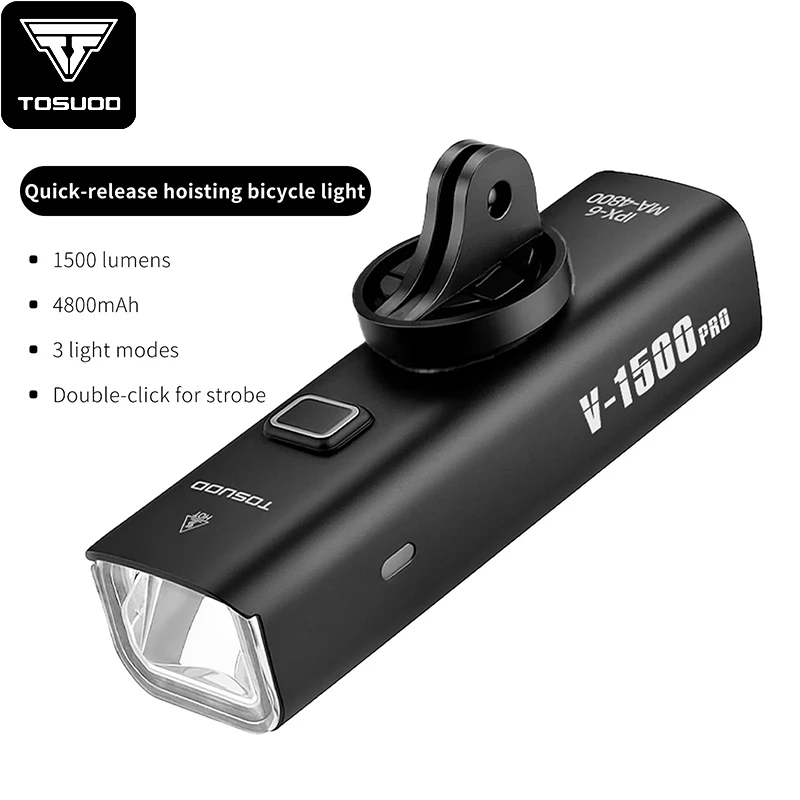
If run time is your primary bottleneck on extended dark journeys, the TOSUOD 1500-lumen front light offers notable value. Equipped with a generous 4800 mAh cell, it delivers the electrical reserves needed for multi-hour evening commutes without frequent charging intervals.
Mounting & Chassis: Encased in an aluminum alloy barrel with IPX6-rated splash resistance, the TOSUOD utilizes a dual-profile mount suitable for either standard handlebar clamp attachments or quick-release hoisting setups underneath a mount arm. It features 3 continuous output steps and double-click strobe modes.
Limitations: While advertised at 1500 lumens, budget optics rarely hold peak output continuously without aggressive thermal regulation. However, because of the large 4800 mAh battery, its medium brightness tier (around 500–700 lumens) offers dependable battery life for regular weekday round-trips.
3. ROCKBROS RHL400 / 200LM: Compact Urban Dependability
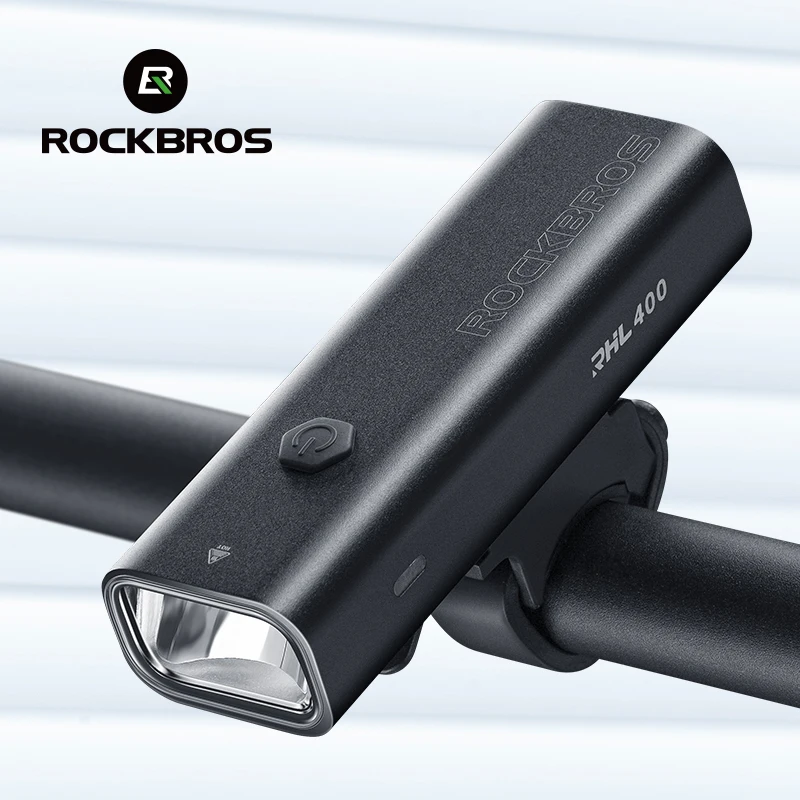
Not every cyclist requires trail-scorching output. For street-lit city centers, bike boulevards, and daily utility errands, heavy battery packs add unnecessary bulk. The ROCKBROS compact series (available in 200LM and 400LM RHL variants) addresses this with a pocket-friendly, quick-release aluminum profile.
Urban Usability: ROCKBROS constructs these casings from CNC aluminum with integrated thermal management circuits that throttle output should the unit exceed 45°C. At 400 lumens, the optic provides sufficient spread to highlight potholes and road debris 15–20 meters ahead while remaining light enough to slip into a jacket pocket when parking at transit hubs.
4. Dual T6 Front Light: Emergency Secondary Lighting
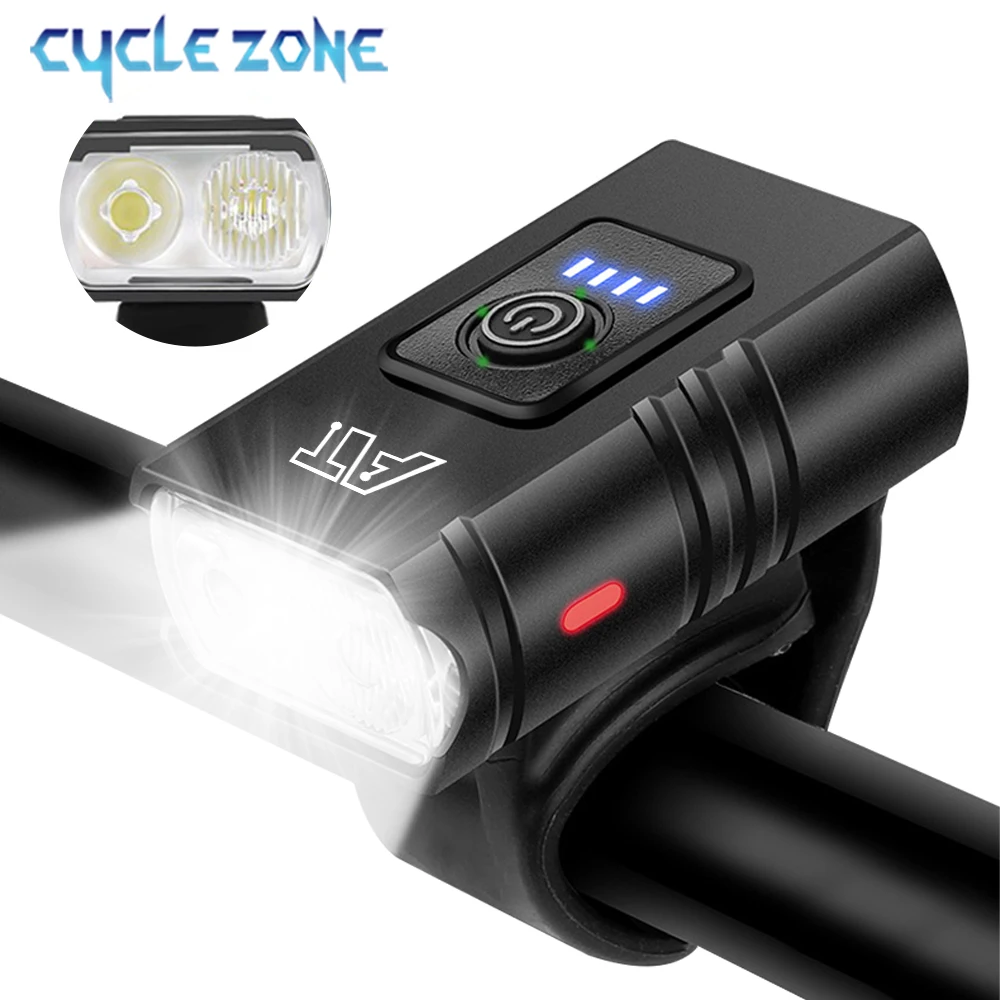
Sitting at the entry-level price threshold, generic dual-emitter T6 bicycle lights serve well as emergency backups or secondary bar lights.
Where It Fits: Featuring dual optics—often combining a spot reflector with a diffuse lens—plus an on-board 4-stage LED power gauge, this unit delivers straightforward Type-C rechargeability. The silicone strap mount offers quick transfers between multiple bikes, though it lacks the anti-glare beam containment and precision machining found in dedicated out-front systems like the CYC1700.
Commuter Specification Comparison
| Model |
Claimed Max Output |
Battery Capacity |
Mounting Architecture |
Primary Strength |
| CYCLAMI CYC1700 |
1700 lm |
4000 mAh |
Out-front hanging / GoPro compatible |
Cutoff beam; wireless remote toggle |
| TOSUOD 1500LM |
1500 lm |
4800 mAh |
Dual top bar / hoist mount |
Battery runtime per dollar spent |
| ROCKBROS RHL400 |
400 lm |
Compact cell |
Quick-detach bar strap |
Lightweight urban commuter form factor |
| Dual T6 Headlight |
Unspecified (~300–500 effective) |
Internal compact |
Flexible silicone strap |
Low-cost spare / backup illumination |
The Verdict: Which Front Light Fits Your Commute?
-
For integrated cockpits and shared cycling pathways: Choose the CYCLAMI CYC1700. The optical cutoff line prevents blinding oncoming commuters, and the under-bracket hanging orientation preserves valuable handlebar real estate for bells and GPS units.
-
For longer rural or unlit commutes on a budget: The TOSUOD 1500LM provides the necessary 4800 mAh capacity to power through extended dark stretches on steady mid-power modes without battery anxiety.
-
For city center riding and short hops: The ROCKBROS RHL400 offers proven thermal control, dependable aluminum construction, and hassle-free pocketability.